The Duplex House of Jozef Schellekens & Theo Op De Beeck – Turnhout
Steenweg Op Mol 64 – 66, 2300 Turnhout
1934 – 1936
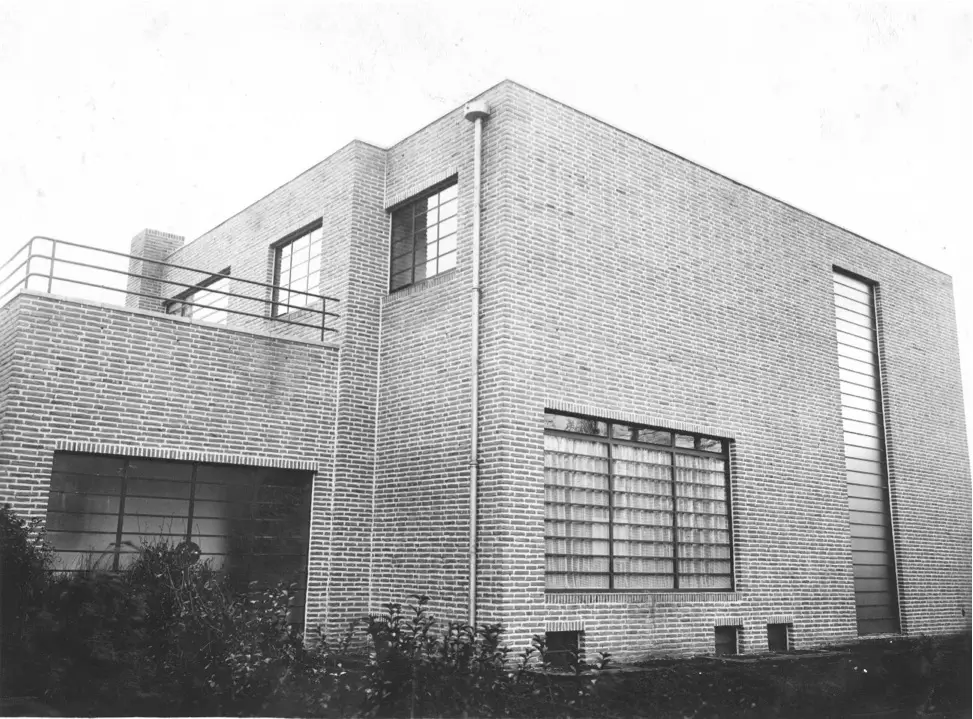
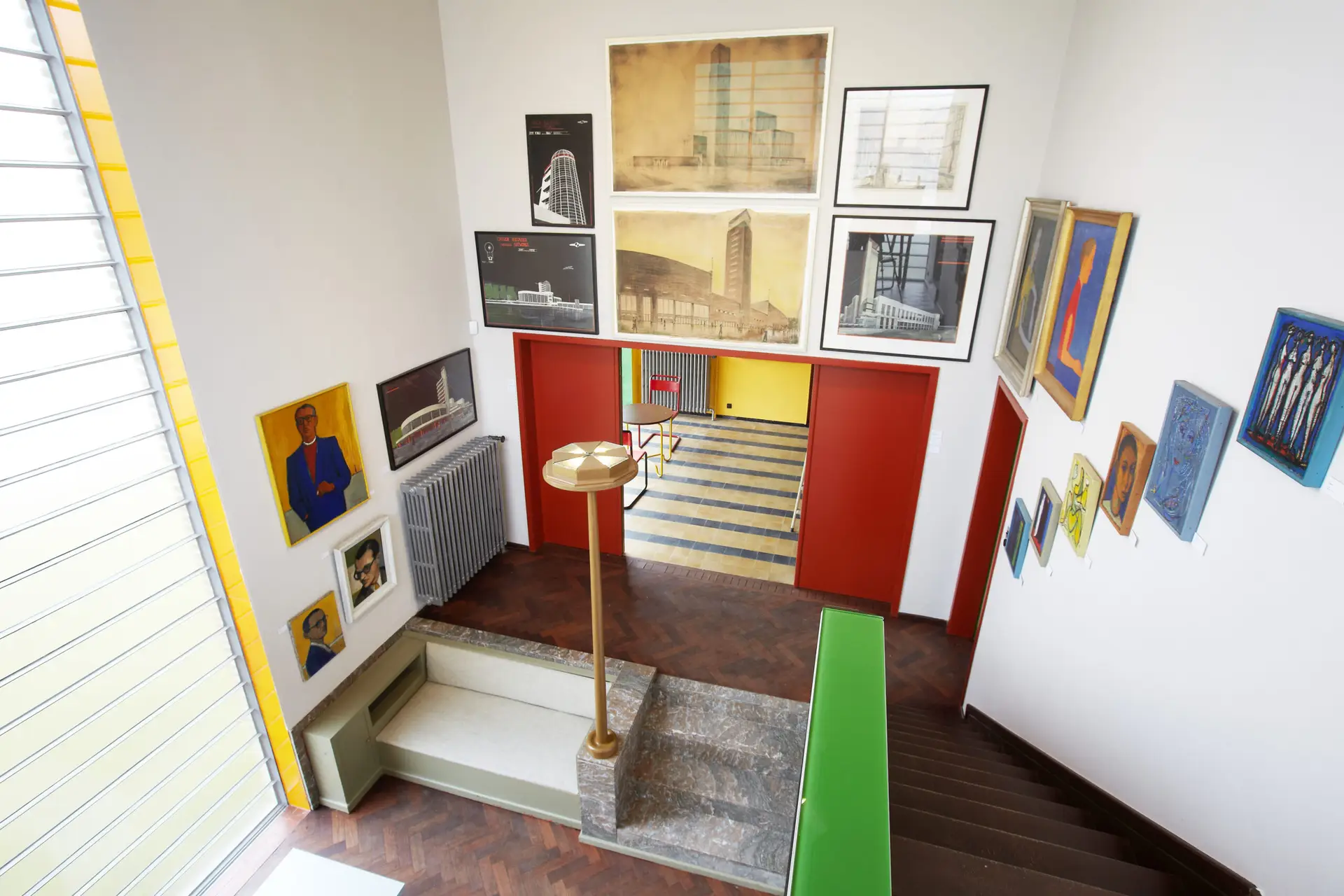
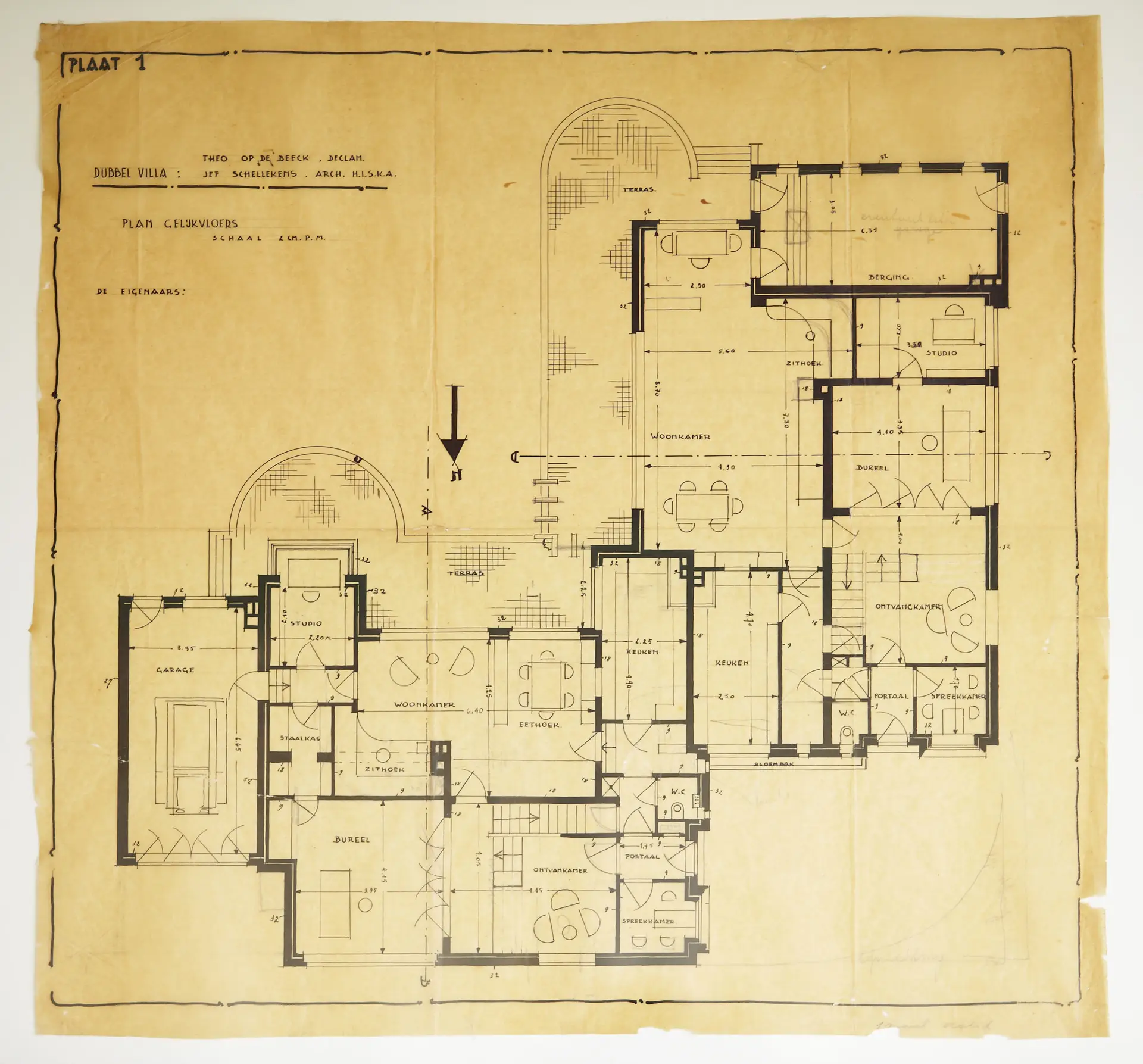
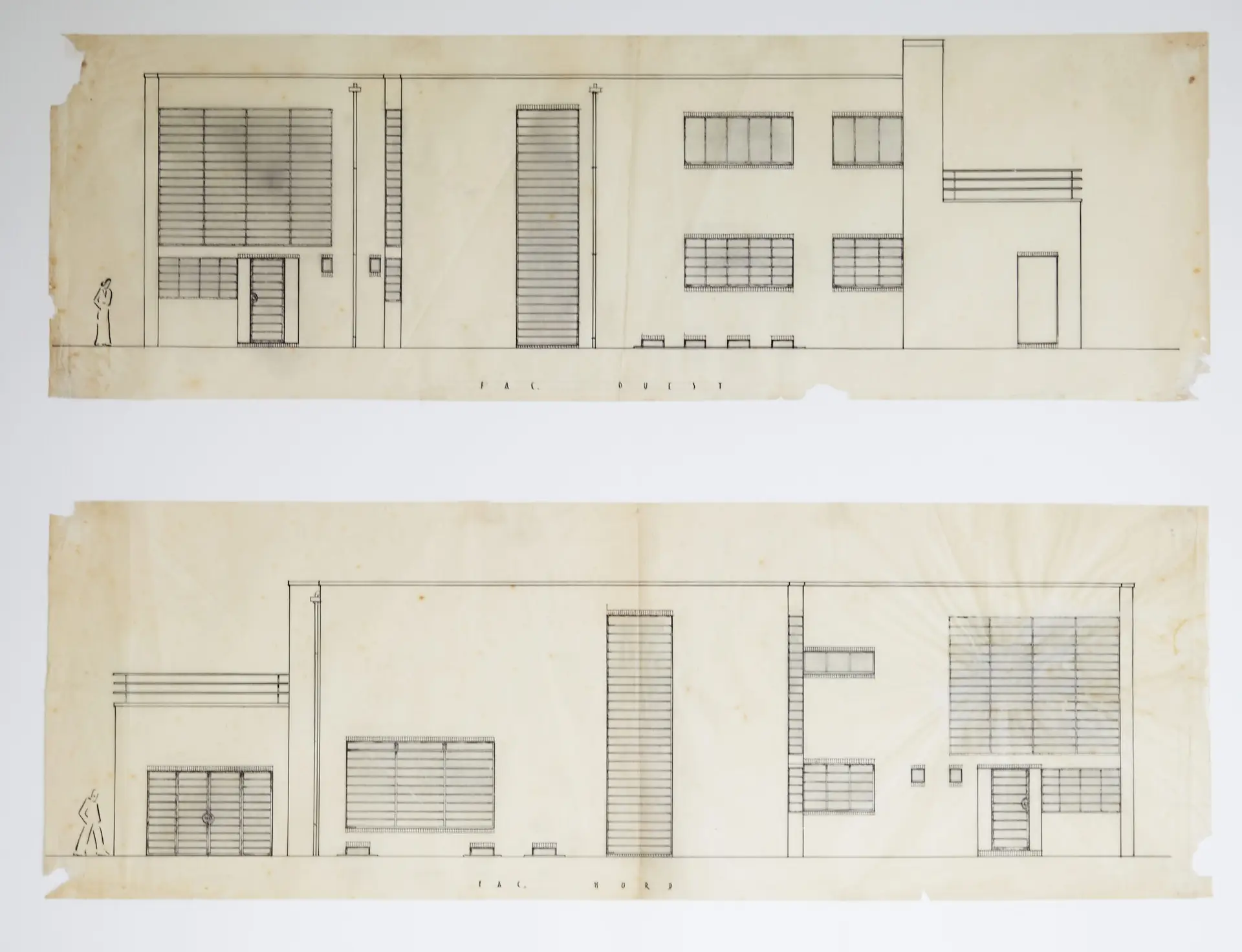
It goes without saying that Schellekens devoted an extraordinary amount of energy to the design of his own house (with the exception of a small townhouse, his first building) and naturally, his bride was closely involved too. From the very beginning they were reportedly a happy and cheerful couple, connected by a warm mutual affection. Inspired by his new life with her, he committed himself entirely to creating a dream house for them both, and for the children they were looking forward to. As he planned to start his own practice, he conceived his house as a dual entity: a private area consisting of the living room and kitchen, both situated by the garden at the rear of the building; and, at the street side, a ‘public’ area that included the office and a reception hall. The reception hall became a double-height space that is all the more impressive to visitors because they access it through a narrow and low entrance – after possibly waiting in a tiny consultation room. Also serving as a stairwell, this space leads to the office four steps higher, while extending in the opposite direction to the mezzanine above the entrance. It is a beautifully articulated space that is activated by light from large windows, which also express themselves in the composition of the façade. In contrast to the bright dynamics of the hall, he designed the living room to be an intimate, sheltered place, closely connected to the garden, atmospherically furnished and equipped with a built-in seating area with a lowered ceiling. The upper floor accommodated four bedrooms, a larger one for the couple and three smaller ones for the intended children. It can be assumed that the plan was developed in consultation with Theo Op de Beeck, who as a cultural figure received numerous visitors, and as an amateur painter needed a studio. Schellekens designed two almost identical houses which he connected at right angles. Their floor plans are nearly (rotated) mirror images of each other and linked together they form a complex L-shape that articulates the street corner. It is a shape with an outer corner that welcomes visitors and an inner corner that opens onto a shared garden.
The inner corner is formed by the living rooms placed at right angles to each other, the outer corner by the end façades standing at right angles. The whole appears as a cluster of substantial volumes, executed in Campine brick and opened up with various types of windows, all made of thin steel profiles. The glazing and windows, the large panes and the horizontal and vertical strips articulate themselves on the canvas of the yellow-brown brick into lively, constructivist compositions. The end façades of both houses are distinguished by the characteristic large window section that occupies most of their upper floor: two enormous latticed windows that, constructed from narrow horizontal strips, mark the two reception halls and emphasize their respective entrances.
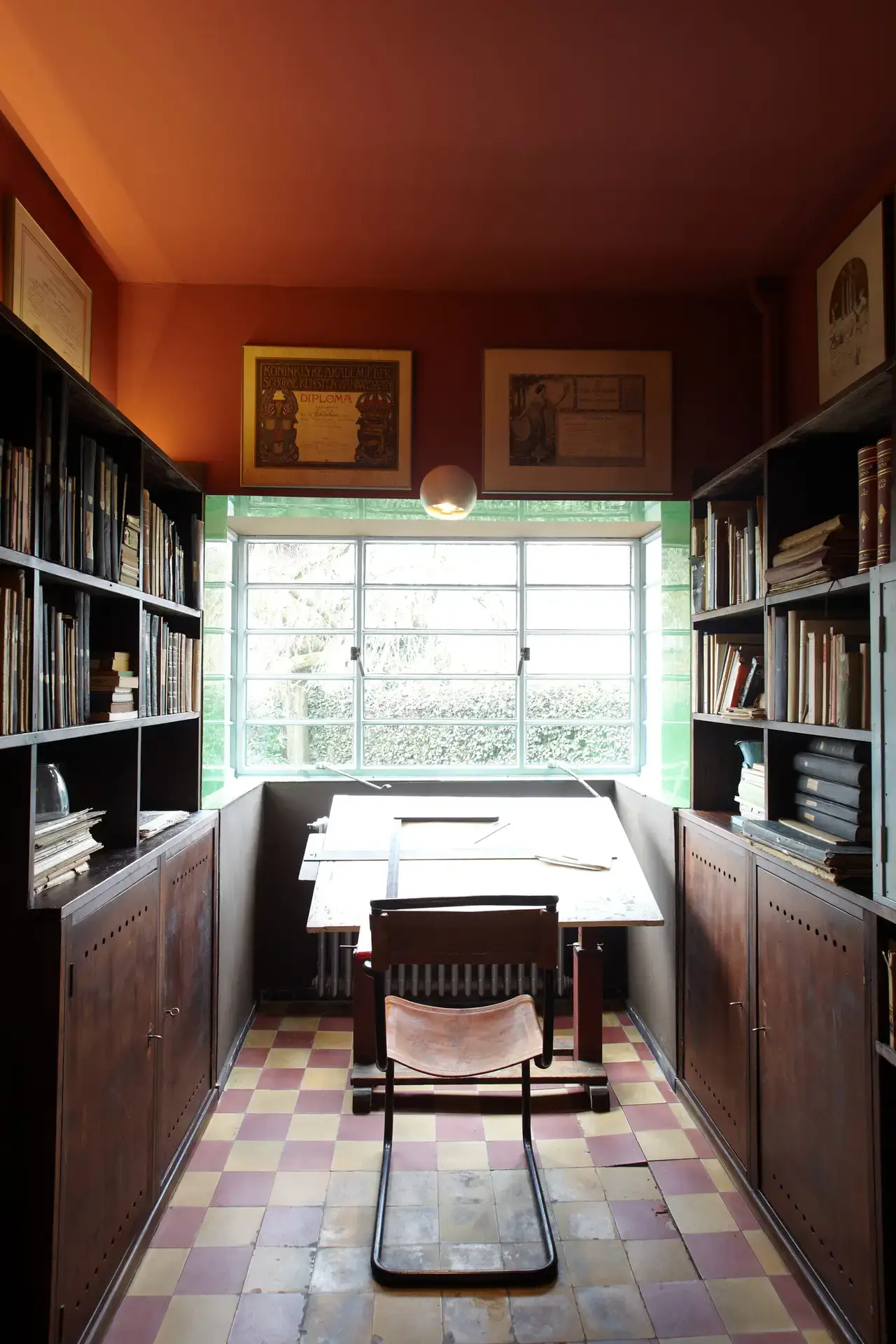
Schellekens paid special attention to his own interior. He clad the walls of his living room in subtly harmonizing colours and in certain places he finished the window reveals with marbriet, a coloured and marbled opaque glass. He also designed most of the furniture himself, both the built-in cabinets that he assembled by hand with his father, and tubular furniture modelled after Mart Stam, which he had made by the local blacksmith. He also conceived a number of murals that he personally painted in the reception hall, living room, and master bedroom.
Because of all this, its robust and expressive exterior and its refined interior, and its consistent contemporary aesthetics, the dual residence that Schellekens completed in 1936 at the age of 27 was, at that time, about the most pristine and complete example of modernist architecture in Turnhout and its surroundings. It was a model of the brick modernism that had been initiated in Antwerp by Eduard Van Steenbergen and in Turnhout by Stan Leurs.
Yves DE BONT and Francis STRAUVEN – The portfolio of Jozef Schellekens