Zilvermeer Provincial Recreation Domain – Mol
Zilvermeerlaan 2, 2400 Mol
1956 – 1959
Under the pressure of the unstoppable and successful rise of modernism, Jozef found himself compelled to gradually adjust his views. Eventually, he resigned himself to the reality of the situation and reconnected with the modernism he had turned his back on 20 years earlier.
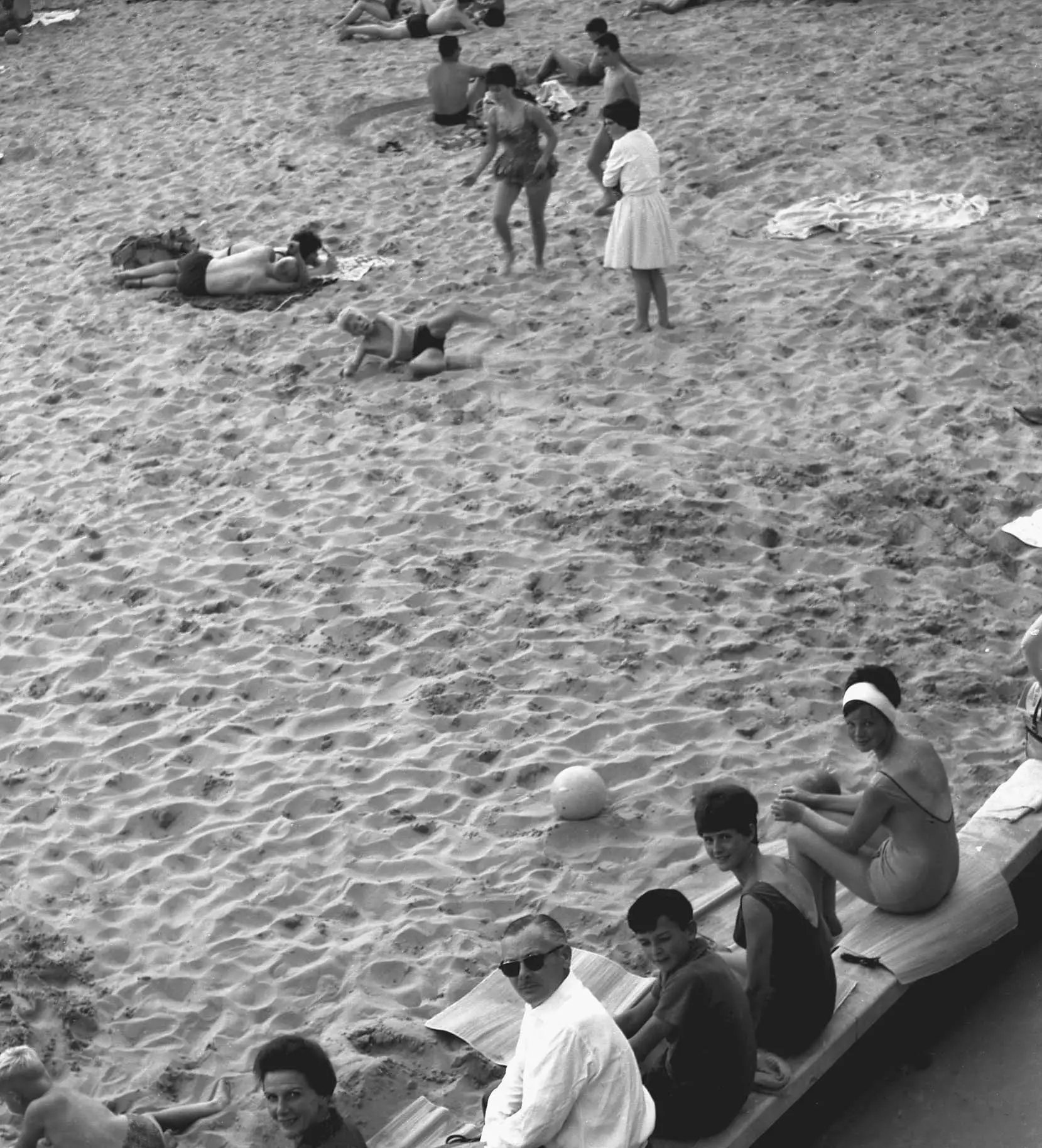
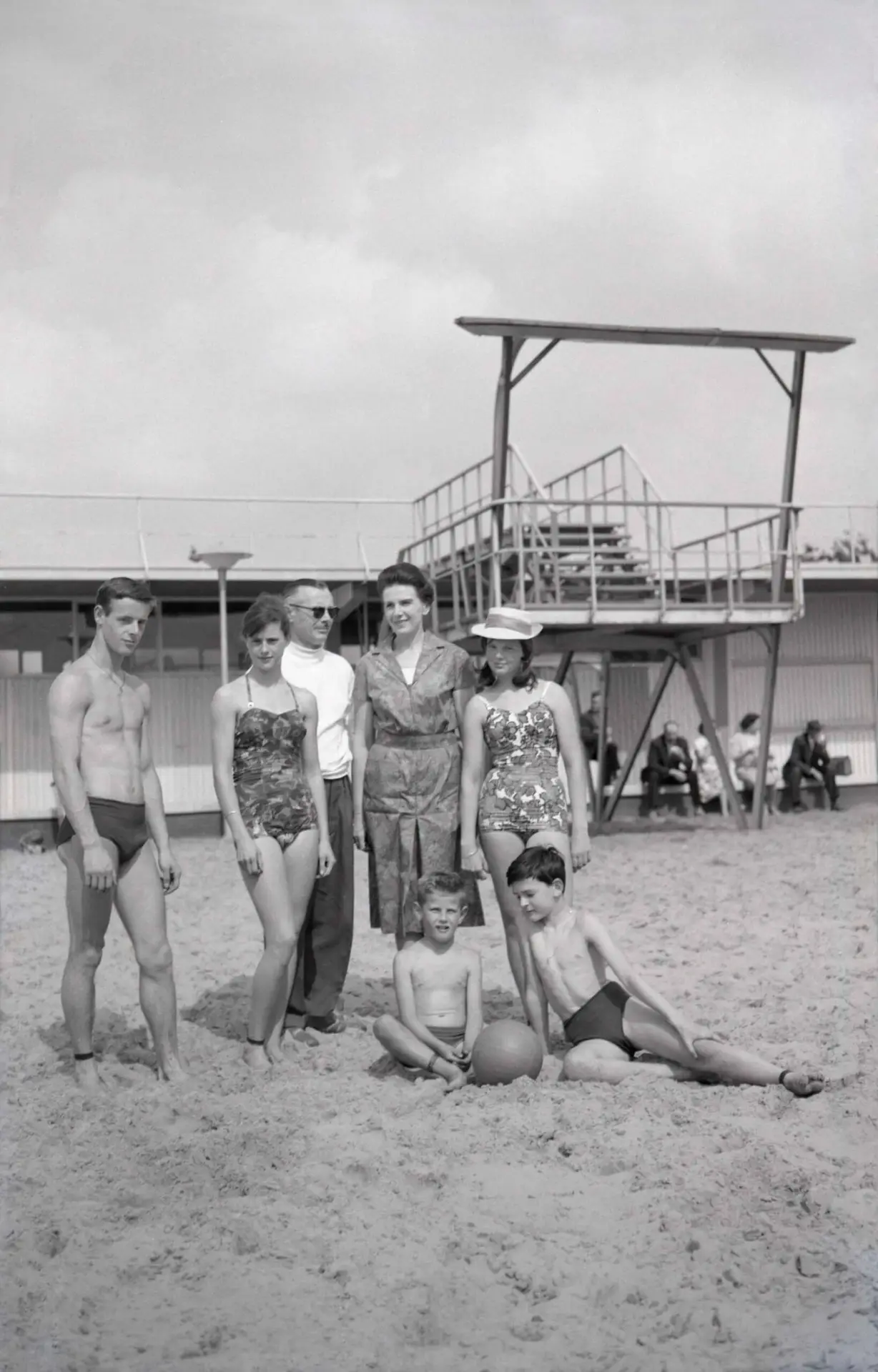
This final about-turn manifested itself very clearly in his most remarkable post-war project, the development of the Zilvermeer Provincial Domain in Mol (1956 – 1959). He began by executing the general layout, profiling the existing sand-extraction lake with a semi-circular beach, constructed using the white sand of the region (1956 – 1957). Subsequently, he designed the beach building (1958 – 1959), an elongated curved structure that partly encompasses and emphasizes the shape of the beach. Perhaps Schellekens borrowed this concept from Maxime Wijnants, who had already applied it in 1939 in the Domain of Hofstade, but he developed it into an elementary and elegant gesture, executed in concrete, steel and glass. The building consists of a concrete skeleton of 46 bays that unfold fan-like around the beach. At the back, it houses wooden changing cabins, 42 for men and 42 for women, while the rows of lockers simply stand under the concrete cross beams. At the front, the building overlooks the beach with a fully glazed façade and a continuous and spacious canopy. The flat roof is designed as a terrace with a cafeteria in the centre. Originally, this terrace was accessible via two steel external staircases whose graceful design clearly bore the stamp of Expo 58. Their landing overlooking the beach was supported by V-shaped pillars that also carried a fish-shaped sunshade, balanced by an elegant ‘tail’.
Schellekens had also equipped the roof terrace with rotatable wooden windbreaks. However, these had to be removed after two years as they raised objections from the local clergy who believed that they offered young couples too much privacy. This intervention could, of course, not detract from the clear, open character of the whole, which still exudes an atmosphere of freedom, spontaneity and relaxation. It was, and remains, an intact and clear structure in which no trace of regionalism or authoritarian monumentality can be detected anymore.
De Bont, Y. Strauven, F. (2018). National Biographical Dictionary. Brussels: KVAB